Student loan payments can make mortgage qualification feel uncertain, especially when your credit report does…
Mortgage Options: FHA, VA and Alternative Loans
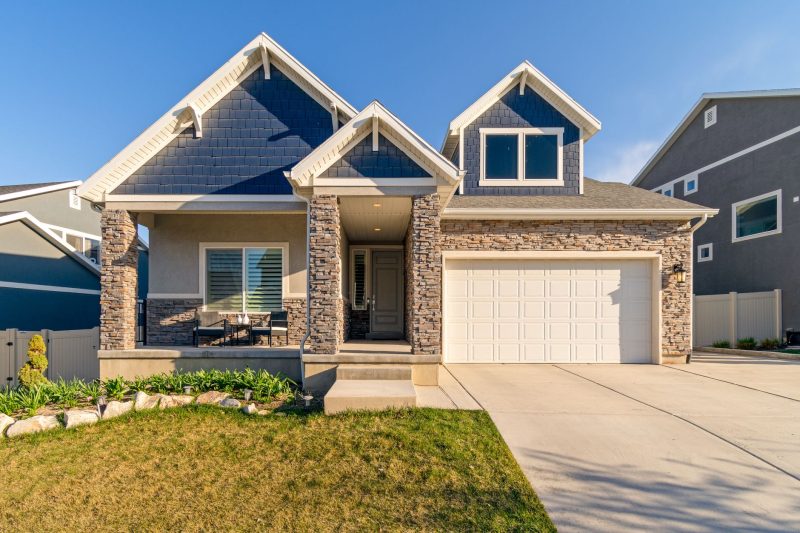
Choosing a mortgage can feel confusing when FHA, VA, conventional, and alternative loan programs all have different rules.
FHA, VA, and alternative mortgage programs provide different ways to qualify based on factors such as credit, military eligibility, income documentation, property use, and available funds.
This guide explains how these mortgage options work, how they compare, and what Twin Cities homebuyers should consider before applying.
Key Takeaways
- FHA Loans: FHA financing offers a 3.5% minimum down payment for borrowers who meet applicable credit and underwriting guidelines.
- VA Loans: Eligible service members, veterans, and qualifying surviving spouses may purchase with 0% down and no monthly mortgage insurance.
- Alternative Loans: Bank statement, DSCR, renovation, construction, and other programs may address income or property scenarios that traditional loans do not.
- Planning: Credit, income, assets, occupancy, property type, and long-term goals should all be reviewed before selecting a program.
- Guidelines: Rates, fees, loan limits, and underwriting requirements vary and should be confirmed for each borrower’s scenario.
Quick Answers About Mortgage Loan Options
- Which mortgage has the lowest down payment? Eligible VA borrowers may qualify for 0% down. FHA starts at 3.5%, while some conventional programs allow as little as 3% down.
- Can a seller help with closing costs? FHA, VA, conventional, and some alternative programs may allow seller contributions, subject to program limits and the purchase agreement.
- Can an alternative mortgage eliminate the need for tax returns? Some bank statement and DSCR programs use different documentation, but lenders still review the borrower, property, assets, and overall risk.
- Does a mortgage pre-approval commit you to one loan? A pre-approval generally does not require you to close with a particular program, although changing programs later may affect documentation, pricing, and timing.
At American Dream Home Team (NMLS# 175656), we help borrowers compare mortgage structures instead of assuming one program fits every situation. That comparison can be especially valuable for first-time buyers, eligible veterans, move-up buyers, self-employed borrowers, and real estate investors.
What Is an FHA Loan?
An FHA loan is a mortgage made by an approved lender and insured by the Federal Housing Administration. FHA insurance reduces some of the lender’s risk, which can make the program more flexible than certain conventional options.
An FHA home loan may be worth considering when a borrower has limited funds for a down payment, needs more flexibility around credit history, or wants to use allowable gift funds. FHA financing is not limited to first-time homebuyers.
Common FHA Loan Features
- A minimum down payment of 3.5% for borrowers who meet applicable credit requirements
- Mortgage insurance that includes upfront and ongoing costs
- Owner-occupancy requirements for the financed home
- Property condition standards established under FHA guidelines
- Loan limits that vary by county and property type
In the Twin Cities metro, FHA loan limits and market conditions can vary across Hennepin County, Ramsey County, Dakota County, Washington County, and surrounding areas. Buyers should verify the current county limit before making an offer.
FHA financing may be used for qualifying single-family homes, townhomes, certain condos, and eligible multifamily properties when the borrower will occupy one unit. Condo eligibility and property condition should be reviewed early because not every property will meet FHA requirements.
How Does a VA Loan Work?
A VA loan is a mortgage backed by the U.S. Department of Veterans Affairs for borrowers who meet military service and eligibility requirements. The Department of Veterans Affairs does not typically lend the money directly; an approved mortgage lender originates and underwrites the loan.
Common VA Loan Features
- 0% down may be available to eligible borrowers
- No monthly mortgage insurance
- Flexible credit and debt review under applicable guidelines
- A VA funding fee may apply unless the borrower qualifies for an exemption
- The property generally must be used as the borrower’s primary residence
VA eligibility is documented through a Certificate of Eligibility, but having a certificate does not by itself establish mortgage qualification. The lender still reviews income, credit, assets, debts, occupancy, property eligibility, and the borrower’s ability to repay.
VA appraisals also include minimum property requirements. These standards are intended to confirm that the home is safe, structurally sound, and sanitary. An appraisal is not a substitute for an independent home inspection.
What Are Alternative Mortgage Programs?
Alternative mortgage programs use underwriting methods that differ from standard conventional, FHA, or VA loans. They may be helpful when a borrower’s income documentation, property type, or financing objective does not fit traditional guidelines.
“Alternative” is a broad category rather than a single loan type. These programs often have different credit, down payment, reserve, appraisal, and pricing requirements. They are not automatically easier or less expensive than traditional mortgages.
Bank Statement Mortgages
A bank statement mortgage program may allow a self-employed borrower to document qualifying income using eligible personal or business bank deposits instead of relying solely on traditional tax-return calculations.
The lender generally reviews a specified history of statements, recurring deposits, business expenses, ownership documentation, and unusual transactions. Transfers, borrowed funds, and one-time deposits may be excluded from the income calculation.
DSCR Loans for Investment Properties
A debt service coverage ratio loan evaluates whether an investment property’s qualifying rental income can support its housing payment. A DSCR home loan may reduce reliance on the investor’s personal employment income, depending on the program.
DSCR loans are generally intended for investment properties rather than primary residences. Lenders may review the appraisal’s market rent, an existing lease, credit, reserves, property type, and ownership structure. Required ratios and documentation vary.
Renovation and Construction Financing
Renovation financing may combine the purchase or refinance of a property with eligible improvement costs. Funds are commonly released in stages as work is completed and inspected.
Construction financing is designed for building a new home and may include a short-term construction phase followed by permanent mortgage financing. Plans, specifications, budgets, builder approval, permits, inspections, and contingency funds may all be part of the review.
Bridge Loans and Other Creative Financing
A bridge loan may provide temporary financing when a move-up buyer is purchasing another home before selling the current one. Because the borrower may temporarily carry multiple housing obligations, lenders commonly evaluate equity, liquidity, income, and an exit strategy.
Other alternatives may include asset-based programs, jumbo loans, fix-and-flip financing, or loans designed around unique investment scenarios. Availability and guidelines vary significantly by lender.
FHA vs. VA vs. Alternative Loans
| Feature | FHA | VA | Alternative |
|---|---|---|---|
| Typical use | Primary residence | Primary residence | Primary, second home, or investment property, depending on program |
| Minimum down payment | 3.5% with qualifying credit | 0% for eligible borrowers | Varies, often higher than government-backed options |
| Income approach | Traditional documented qualifying income | Traditional income with VA residual-income analysis | May use bank deposits, property cash flow, assets, or other approved methods |
| Mortgage insurance or program fee | Upfront and ongoing mortgage insurance generally applies | No monthly mortgage insurance; a funding fee may apply | Varies by program |
| Eligibility | Open to qualified borrowers | Requires VA eligibility | Program-specific |
This comparison describes common structural differences, not an approval decision. Current rates, fees, insurance costs, underwriting standards, and program availability should always be verified with a licensed mortgage professional.
How to Choose the Right Mortgage Program
The lowest down payment is not always the lowest overall cost, and the program with the simplest documentation is not always the right long-term fit. We recommend comparing the complete structure of each available option.
1. Identify How the Property Will Be Used
Primary residences generally have the widest range of FHA, VA, USDA, and conventional choices. Second homes and investment properties have different requirements, while DSCR financing is specifically designed around qualifying rental-property scenarios.
2. Review Income Documentation
Salaried borrowers may document income differently from self-employed borrowers, commissioned employees, or people with multiple income sources. Reviewing tax returns, pay statements, bank statements, and business documents early can reveal which programs are realistic.
3. Calculate Funds Needed Beyond the Down Payment
Closing funds may include lender charges, third-party services, prepaid taxes, homeowners insurance, escrow deposits, and required reserves. Appraisal and inspection expenses should also be considered. Amounts vary by property, lender, location, and loan type.
4. Consider the Property Itself
A single-family home may qualify differently from a condo, townhome, new construction property, or home requiring renovation. Condo approval status, appraisal findings, association documents, insurance coverage, and property condition can influence the available options.
5. Compare Short-Term and Long-Term Costs
Ask for an estimate showing the interest rate, payment, mortgage insurance or funding fees, cash needed at closing, and potential future refinancing considerations. Current market rates change, so estimates should be compared using the same assumptions and time frame.
What to Expect During Pre-Approval
Mortgage pre-approval is a review of a borrower’s credit, income, assets, debts, and proposed financing before a purchase contract is finalized. It helps establish a practical price range and can identify documentation questions before an offer is submitted.
A typical planning process includes:
- Discussing the property type, occupancy, down payment, and financial goals
- Completing a mortgage application
- Providing income, asset, identification, and housing documents
- Reviewing credit and monthly obligations
- Comparing eligible FHA, VA, conventional, or alternative options
- Updating the file when an offer is accepted
Pre-approval timing depends on document availability and the complexity of the scenario. The full purchase process commonly takes several weeks after an accepted offer, but appraisal, title, insurance, property, or underwriting issues can affect that schedule.
Local Mortgage Planning in the Twin Cities
Property taxes, housing inventory, condo availability, and county loan limits can differ throughout Minneapolis, Saint Paul, Eagan, Woodbury, Lakeville, Bloomington, Maple Grove, Blaine, Stillwater, and other Twin Cities communities. Wisconsin properties may also involve different taxes, title practices, and program considerations.
We look at both the borrower and the property because a financially workable loan must address both sides of the transaction. Early planning can be particularly useful when purchasing new construction, considering a renovation, selling one home while buying another, or qualifying with self-employment income.
Let’s Review Your Mortgage Options
If you are comparing FHA, VA, conventional, or alternative mortgage programs, we invite you to call, text, or email us. We can review your scenario, explain available options, discuss pre-approval planning, and help you understand the next steps without assuming one loan type is right for everyone.
Karli Spahr, Chief of Dream Fulfillment
NMLS ID# 253291
Licensed in Minnesota, Wisconsin, and Florida
25+ years of mortgage experience
Frequently Asked Questions
Can FHA financing be used for a condo or townhome?
FHA financing may be available for qualifying condos and townhomes, but the property and project must meet applicable FHA requirements. Condo approval status, association finances, insurance, owner occupancy, and other project details may need to be reviewed.
Can VA loan benefits be used more than once?
VA loan benefits may be reused when the borrower has sufficient available entitlement and meets current eligibility and underwriting requirements. In some cases, a borrower may retain an existing VA loan and still have remaining entitlement for another purchase.
Are alternative loans available after a recent credit event?
Some alternative programs may allow shorter waiting periods after certain credit events than traditional mortgage programs. Eligibility depends on the type and timing of the event, re-established credit, down payment, reserves, property, and current lender guidelines.
How long does the mortgage process usually take?
A purchase mortgage commonly takes several weeks from accepted offer to closing, although timing varies. Appraisal scheduling, title work, document response times, property issues, and underwriting conditions can shorten or extend the process.
Can rental income help someone qualify for a mortgage?
Eligible rental income may be considered for certain conventional, FHA, VA, and investment-property loans. The amount that can be used depends on the lease, tax returns, appraisal, rental history, property type, and specific program guidelines.
This is educational and not financial advice. Loan programs and guidelines can change. Talk with a licensed mortgage professional about your specific scenario.

About the Author
Karli Spahr
Chief of Dream Fulfillment at American Dream Home Team · NMLS #253291
I’ve been doing mortgages for over 25 years and am passionate about helping others obtain The American Dream of homeownership. I have a Bachelor’s degree in Business and Economics and a Master’s Degree in Project Management.
Specializes in: FHA, VA, first-time buyer programs
Licensed in: FL, MN, WI
Related Posts